

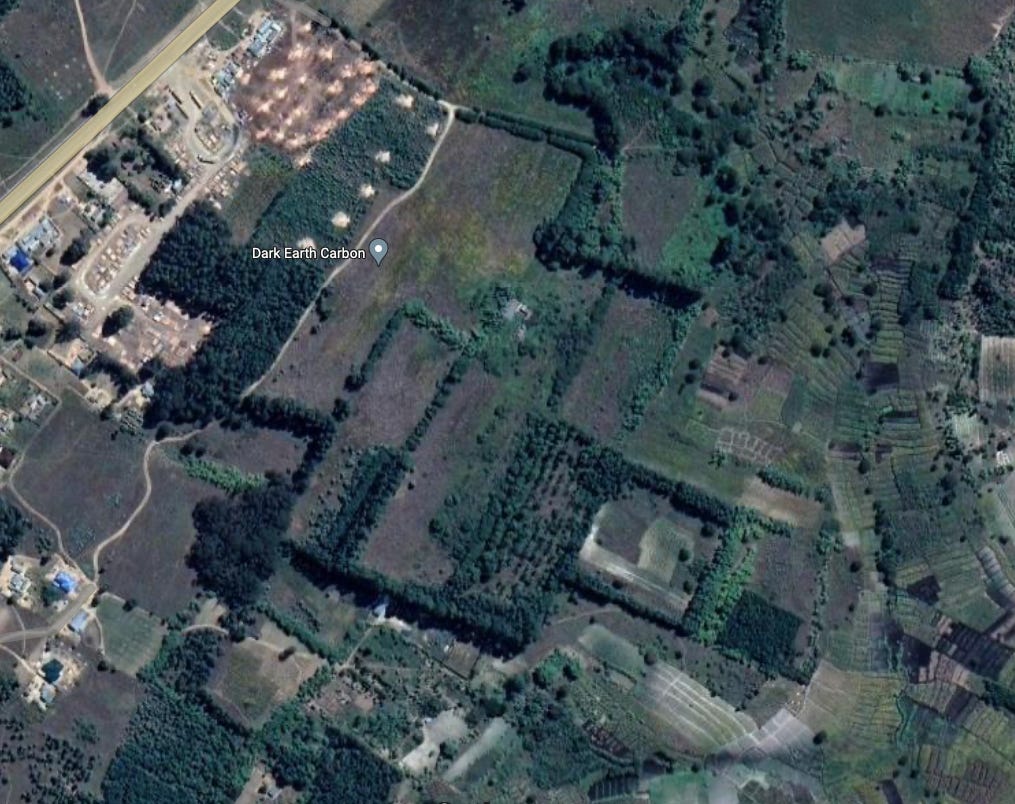
In the Beginning
The search for a suitable for Dark Earth Carbon’s first biochar reactor began in mid-2022, and it involved more than just weighing rent and geographical convenience. The search required the evaluation of other factors such as transport logistics, utility infrastructure, ecological impact, and community engagement among others. On top of this, it was imperative to reconcile the demands of large-scale biochar production and minimising environmental impact.
This Field Note will look at the interplay of these technical, social, physical and environmental elements that we had to consider before settling on a site, signing a lease and start digging!
Primary Considerations
Road Infrastructure Proximity: Tanzania has a restricted road network so proximity to a major highway was key for site selection. Further, it was crucial that this highway was a sealed tarmac road as dirt roads often turn to mud and become inaccessible during the rainy season. The road would also need to be sturdy enough to accommodate large trucks carrying heavy loads. Also, vehicular congestion is an almost constant issue so a site that’s positioned on the town's predominant side for traffic inflow and outflow was desirable to minimise transit delays.
Electricity Accessibility: Parallel to road concerns, Tanzania's electrical infrastructure is also limited. While TANESCO (the government-owned electricity utility) continues to expand the grid, many areas in rural Tanzania—along with the residences and businesses located there—either resort to using generators or go without power entirely. Given the operational demands of the biochar reactor, relying on generators was not a viable option. Additionally, building power lines to connect a distant site to the infrastructure would not be financially feasible. Consequently, the site needed to have ready access to the electrical infrastructure
Proximity to Biomass Suppliers: The feed stock required to produce biochar, like branches and logs, are heavy, bulky and expensive to transport. Hence, being close to sources of large quantities of green waste, such as branch offcuts from sustainable timber and forestry related industries, was key.
Workforce: Proximity to a population centre is significant for several reasons. Firstly, individuals in rural areas, particularly the impoverished, often have long commutes on foot to work or to farm distant, marginal land. These lengthy walks could negatively impact individuals already in fragile health or malnourished, while also limiting time for economically productive work, or social and family engagement. Additionally, shorter commutes are safer reduce the potential of walking home at night where rural roads are often poorly lit and lack pedestrian pathways. As such, there is a very real and heightened risk of pedestrians being struck by vehicles. Given being closer to a population centre reduces these risks, morally we believed proximity to a workforce should be a primary consideration.
Shorter commutes also reduce the chance of employee fatigue. Given the considerable manual labour involved in moving large volumes of green waste around a site, a rested workforce is more productive.
Lastly, being close to a population centre brings economic benefits. Workers earning stable, liveable wages tend to spend more on goods, services, and their children’s education. This spending acts as an economic multiplier, creating a positive ripple effect that benefits the wider community.
Other Considerations
Terrain and Vegetation: It’s inherently challenging for any enterprise to have a negligible environmental footprint. Prioritising sites that lack significant natural habitats or biodiversity is therefore important. Additionally, choosing level sites that require minimal earthworks and vegetation clearing not only reduced the environmental impact, but also more cost-effective.
Space Requirements: Determining the amount of land required to store green waste and biochar was a challenge due to uncertainties surrounding volume. However, a local plywood manufacture, Tanganyika Plywood, provided some guidance. Tanganyika Plywood occupies 10 acres of land that accommodates approximately 600 tonnes of timber and associated waste — a capacity deemed insufficient. Given Dark Earth Carbon’s goal to process 25 tonnes of waste per hour over a 16 hour daily operation, we resolved that a minimum of 15 acres is necessary.
Lease and Land Ownership: With a background in surveying, I found this aspect particularly interesting as there are historical and bureaucratic risks and complexities not common in developed counties.
Before the enactment of the Land Act 1999 and Village Land Act of 1999, the system of land tenure was a dated amalgamation of colonial laws and post-independence statutes. Although the introduction of both Acts is a commendable effort to standardise legislation for various reasons, their relative novelty still poses challenges. The language within the Acts is often ambiguous, leading to confusion and misunderstanding among the citizenry. This lack of clarity is particularly prevalent among residents in rural areas, who may not fully grasp the provisions and protections afforded by these significant legislative measures.
Additionally, unlike the UK's centralised HM Land Registry, there was no central land registry system pre 1999. As a result, many plots, including in urban areas, remain without surveyed, undisputed titles. Traditional boundary markers, such as trees and other natural landmarks, have often been the only indicators of property limits. Over time, with land being sold, or subdivided through inheritance, the clarity of ownership gets very blurry. While obtaining a surveyed title is possible, the process is burdensome, expensive, and time-consuming, especially when multiple claimants are vying for a single site. Securing a plot with a surveyed title, therefore, becomes a crucial to avoid disputes over ownership — an important factor when entering into lease agreements!
Site found!
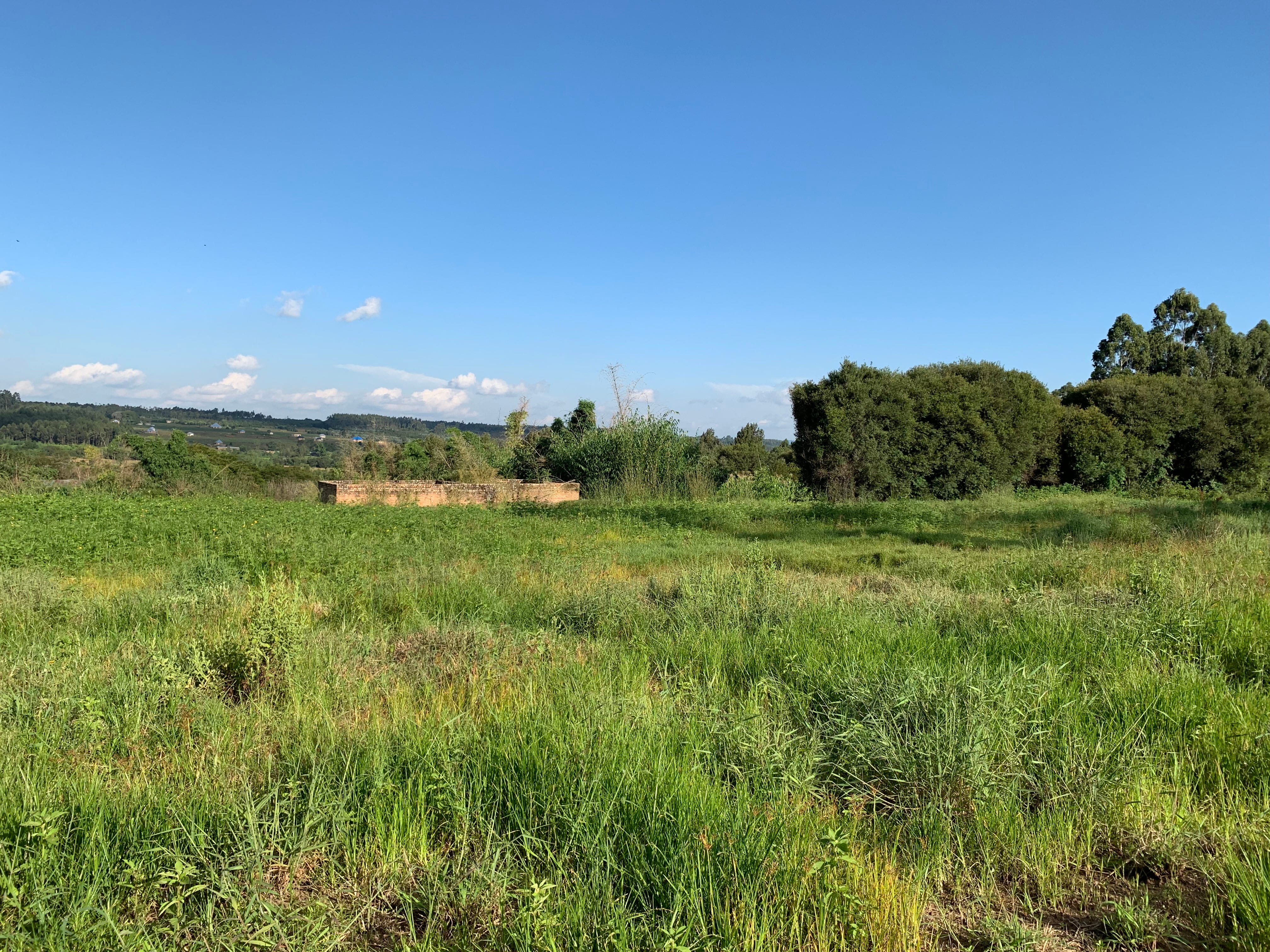
After a thorough search, we identified a promising 20-acre site situated approximately 8 km northwest of Mafinga Town. With a population of around 122,000, the town can provide a steady work force, and the surrounding region is a hub for sustainable forestry and timber industries. The selected location is strategically positioned along the sealed A104, which provides good connections to both Dar es Salaam and Dodoma — Tanzania's largest city and capital, respectively. Additionally, connecting the site to the power grid will require the installation of only minimal power lines.
The selected site was an old farm where all native vegetation had be cleared decades ago and developing the site will have a negligible impact on any habitat or biodiversity value. There were also some dilapidated farm buildings, though it is unlikely there will be any value holding onto them. Further, ownership was clear - the site had a surveyed title removing any disputes over proprietorship and the validity of our lease.
Moreover, the site is in proximity to agricultural regions predominantly cultivating cereal crops, including maize, rice, sorghum, and millet, as well as cash crops like cotton and tobacco. The soils in these areas have experienced degradation over time, and the introduction of biochar will be a valuable amendment to enhance their fertility.
Up next in Field Notes…
With the lease signed and the paper work done, it’s time to get out the shovels and prep the site for development! Not without of course, a smorgasbord of administrative engagements with the State, community elders, and more!